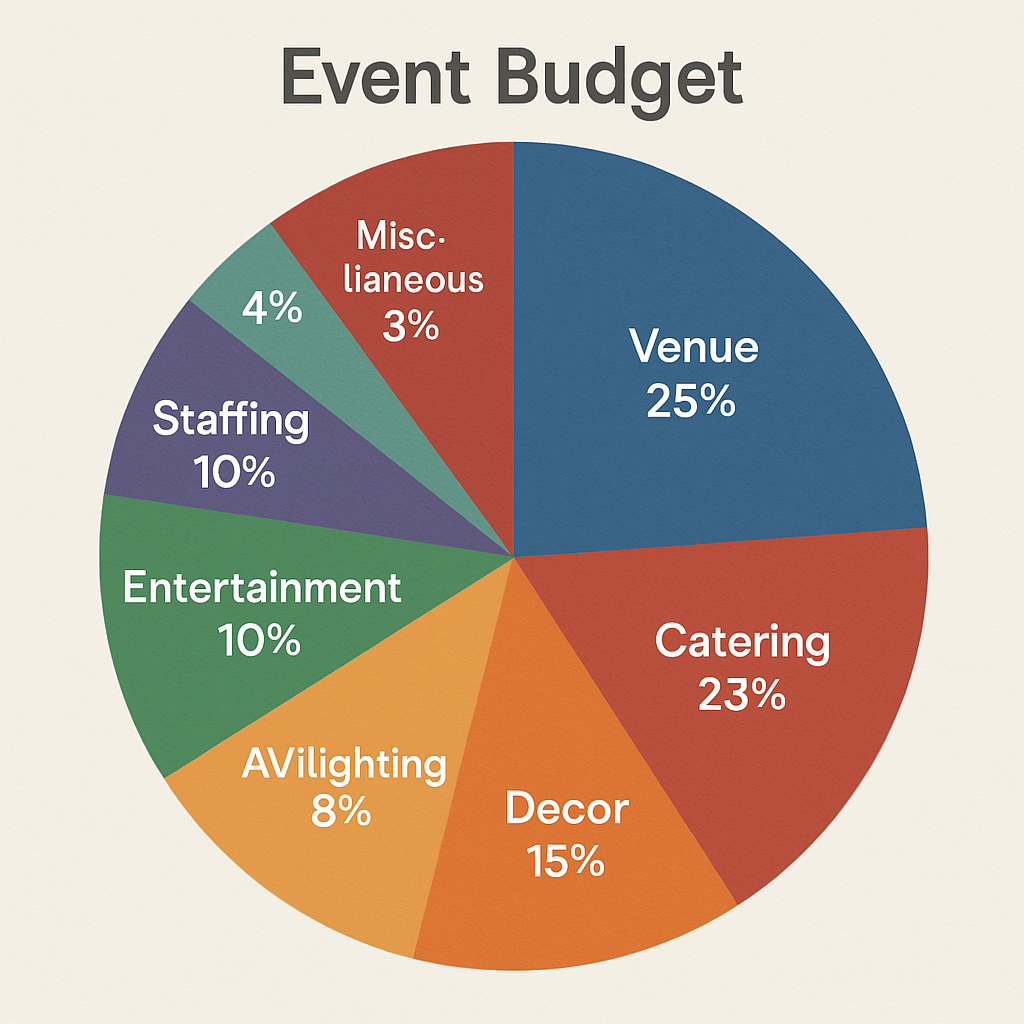
Event budgets can feel intimidating, but they don’t have to be. At the end of the day, your budget is just a list of what it takes to deliver the experience you’re trying to create.
Start with the essentials. Venue, sound, lights, video, staff, speakers, and any materials you need. Those form the backbone of your cost. Then decide what kind of experience you want. Do you want food? A backdrop? Merch? These things add up fast, but they also elevate the environment.
Once you know your total cost, you can set your ticket price or funding strategy. Some events need to break even. Some need to turn a profit. Others are strategic losses because they create long-term momentum.
Your budget shouldn’t scare you. It should empower you to make the right decisions. When you know what the event costs, you can build the right plan around it.
The line items can help you find deals or partnerships to drive your costs down.
When Taking a Financial Loss Can be a Smart Strategy. Not every event needs to make money. Sometimes the smartest move is intentionally taking a loss because the long-term value is worth it. I know that sounds crazy, but it’s true.
When we planned the Kona Coast Leadership Summit at the Four Seasons, the actual cost per person was much higher than what we charged. A full-price ticket would’ve scared people away. But we knew the event wasn’t the final product - relationships were. The event opened doors that more than covered the cost over time.
Sometimes the win isn’t profit. It’s connections, trust, visibility, or future opportunity. Business owners understand this. Ministry leaders understand this. Movement builders understand this too.
Not every event needs to be a financial win to be a strategic win.